Roundhouse News

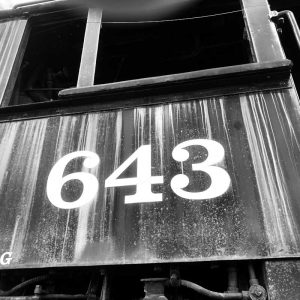
Sugarcreek, Ohio – Measuring more than 108 feet long, a lightweight of 308 tons, amassing 450 tons fully loaded.  The massive steam locomotive #643 has been placed on display inside the Age of Steam Roundhouse Museum (AoSRM) in Sugarcreek, Ohio. Formerly owned by the Bessemer and Lake Erie Railroad (B&LE) and operated in the states of Ohio and Pennsylvania, the towering 2-10-4 #643 joins 23 other rare, old-time steam locomotives, dozens of diesel engines and acres of railroad cars in AoSRM’s vast collection of historic trains.

Constructed in 1944 at the height of World War II, the “War Baby” #643’s boiler generated a whopping 4,700 horsepower to move freight trains loaded with raw iron ore for Pittsburgh blast furnaces and the making of steel to help win the war. Just 10 years later, all B&LE steam locomotives had been scrapped and replaced with new-fangled diesel engines, and #643 was the only B&LE 2-10-4 steamer saved. Spending the next 30 years in railroad storage, the #643 was sold to a private individual who attempted to rebuild it for return to operation, but the task was unsuccessful. Eventually, the railroad tracks around #643 were torn up; it became land-locked and essentially abandoned. There was no way to easily or economically remove the giant locomotive unless a rescuer stepped up. It seemed #643 was doomed to be scrapped, melted down and made into razor blades.

And the rescuer that did step up was the Age of Steam Roundhouse Museum, an organization – perhaps the only organization — with the personnel, experience, facilities, finances and determination to do the impossible … to save the #643 from becoming 300 tons of scrap metal. The AoSRM purchased the locomotive in August 2019, but it would require a Herculean effort by AoSRM spread across 4 years to prepare #643 for its complicated and difficult removal. The locomotive was disassembled into hundreds of smaller individual parts that could be transported easily to Ohio. Then #643’s huge, stripped-down carcass was separated into 3 major pieces—the empty coal and water tender, the 8-foot diameter boiler, and the massive, 57-foot-long frame with its ten 64-inch driving wheels. The 643’s tender was hauled on a highway truck to the Age of Steam’s beautiful roundhouse. The locomotive’s boiler was separated from its wheels, and then both pieces were transported to Sugarcreek on two heavy-duty flatcars. The final delivery of #643’s pieces and parts to the Age of Steam Roundhouse Museum occurred on February 16, 2024. The #643 had been saved in pieces, but it was saved!

AoSRM’s repair crew had been busy working on another steam locomotive in the next shop stall, but they also worked diligently so that #643 was carefully disassembled, successfully transported, totally reassembled, cosmetically restored, professionally painted and, nine months later in November 2024, happily placed on display in the Age of Steam Roundhouse stall #5. Finally, #643 was safe, and in one piece, in its forever home.

The first public view of #643 will be during the Age of Steam Roundhouse Museum’s Member Day on March 29th. To attend this member-only event become a member of the Age of Steam Roundhouse Museum at https://ageofsteamroundhouse.org/join-us/#membership. Member’s Day will be from 1 pm – 3 pm and we will have a train ride through the yard. Will we also be opening our 2025 Jacobson Gallery as this year’s exhibit is Moniker. For more information about the Age of Steam Roundhouse Museum, visit ageofsteamroundhouse.org and keep up to date with the latest news on Facebook.

Sugarcreek, Ohio – The ex-Missouri Pacific business car #11, now named “Sugarcreek” #800003, has begun a new chapter after serving Jerry Joe Jacobson and his family for over 20 years as they traveled the rail routes of Amtrak. The Jacobson family has generously donated the “Sugarcreek” to the Age of Steam Roundhouse Museum, where it will join the unique collection of rail equipment that Jerry has assembled for future generations to enjoy.

Although we will no longer see the “Sugarcreek” at the rear of Amtrak trains, it is comforting to know that it will still be preserved and in use for the future.

“Sugarcreek” has departed from Pittsburgh Penn Station and is currently being transported by Norfolk Southern Corporation. It is set to interchange with the Ohio Central Railroad on its way to its final destination in Sugarcreek, Ohio.

For more information about the Age of Steam Roundhouse Museum, visit ageofsteamroundhouse.org and keep up to date with the latest news on Facebook.
Sugarcreek, Ohio – The Age of Steam Roundhouse Museum is excited to announce several personnel changes within the Jerry & Laura Jacobson Foundation. Bill Strawn and Barry Fogle have retired from their positions on the board of directors. Both have been invaluable in their service as founding directors and previously worked with Jerry Jacobson on his Ohio Central Railroad System until its sale to Genessee & Wyoming. While they will be greatly missed, their guidance has provided a strong foundation that will continue to influence us in the future. We sincerely thank them both for their dedication and leadership of the Foundation, just as Jerry would have.

In January, Pete Poremba will step down from his position as Executive Director and assume the role of Board Chairman, which was vacated by Bill’s retirement. Our current Assistant Director, Nathan Vance, will take over as Executive Director and manage the day-to-day operations of the Foundation. Nathan has also served in various roles on the Ohio Central System.

In February, Denny Varian will join the board as a new member, filling the seat left open by Barry’s retirement. Denny has a long history as a railroad manager, having been involved even before the first run of an Ohio Central train. He will retire from his current position as Facility Manager at the Roundhouse to be eligible for his new role as a board member.

Our team is tight-knit and committed to the legacy of Jerry, Laura, the Foundation that bears their names, and the railroad companies that came before. We are confident that this transition will be seamless and smooth. You can count on the Age of Steam Roundhouse Museum to continue the legacy of quality and devotion instilled within us through our decades of association with our founders, Jerry and Laura.

For more information about the Age of Steam Roundhouse Museum, visit ageofsteamroundhouse.org and keep up to date with the latest news on Facebook.
Sugarcreek, OH- The Genesee & Wyoming Ohio Central Railroad (OHCR) recently donated a diesel locomotive, GE B23-7R 4092, to the Age of Steam Roundhouse Museum (AOSR). “The Age of Steam is grateful to the Ohio Central for the donation of this significant locomotive to our collection. In preserving this locomotive, we preserve the memories, history, and experiences of countless railroaders, the railroads where this locomotive served, the fans of those railroads, and the uniqueness of this class of locomotive. Most importantly, our founder, Jerry Jacobson would be proud to have it in his collection.” Commented AOSR Executive Director, Pete Poremba. This locomotive is being preserved because the museum’s founder, Jerry Joe Jacobson, had a particular fondness for this model. He had made efforts to reunite the entire class of 11 locomotives, as they became iconic to his railroad, the Ohio Central System. Tim Sposato, the Chief Mechanical Officer at Age of Steam Roundhouse, worked with OHCR to secure this donation. Dan Pavik – G&W Vice President of the Great Lakes Division said, “Preservation of this locomotive is significant in several ways because it represents a number of entities and ties them together over different eras.”  Representatives from the OHCR and the Monongahela River, Railroad and Transportation Museum (MRRTM) gathered at the Age of Steam Roundhouse Museum for a dedication ceremony to commemorate the donation of diesel locomotive 4092. The MRRTM group had been eager to preserve some of these locomotives as they were the last existing ones built for and purchased by the Monongahela Railway. The Age of Steam Roundhouse Museum is thrilled to add this diesel locomotive to its collection. Individuals present from the Age of Steam Roundhouse Museum were, Pete Poremba (Executive Director), Tim Sposato (Chief Mechanical Officer), Nathan Vance (Assistant Executive Director), Denny Varian (Facilities Manager), Jim Corrothers (Legal Counsel). Representatives from G&W were Dan Pavik (VP, Great Lakes Division), Tim Slusser (GM, Ohio Central System), Garry Buchanan (Ohio Central Mechanical Manager), and Scott Wentz (Assistant VP Reginal Mechanical). Also on hand, we had representatives from the Monongahela River, Railroad, and Transportation Museum and they included Gary Pokorny and Kevin Yackmack.

Roundhouse Report - Winter 2022-23​

Greetings! Over a year has passed since our last Roundhouse Report was published, and we here at Age of Steam Roundhouse Museum are excited to share some of the recent happenings in our restoration backshop and around the facility.

Age of Steam's New Car Storage Shed

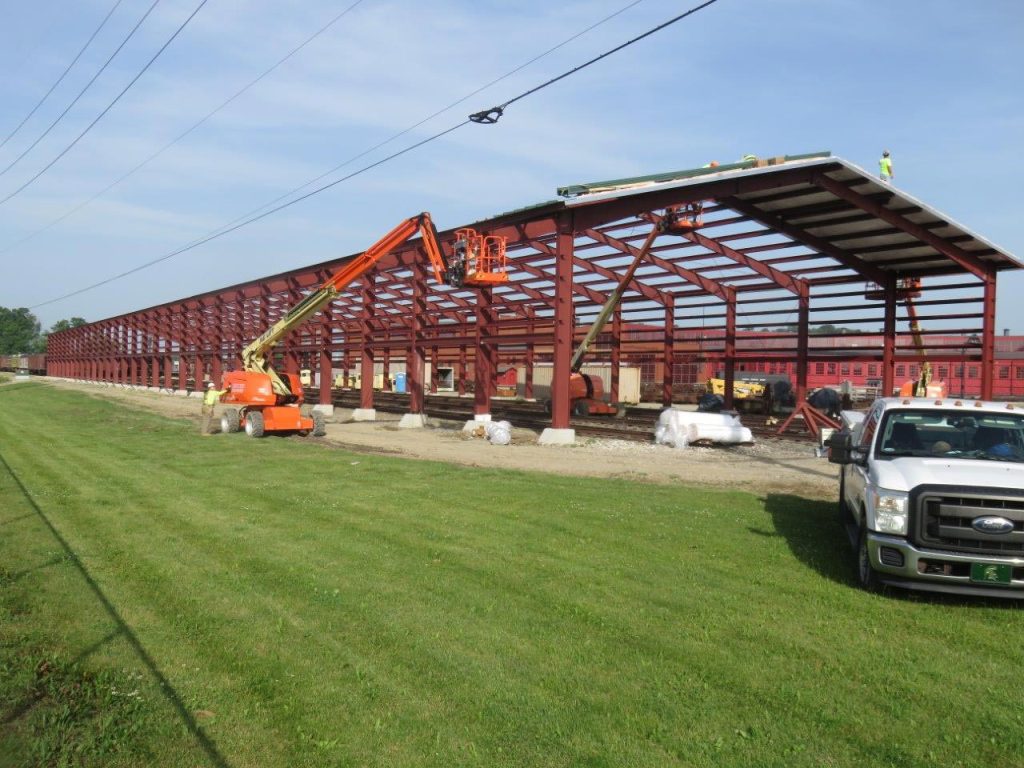
new car shed construction

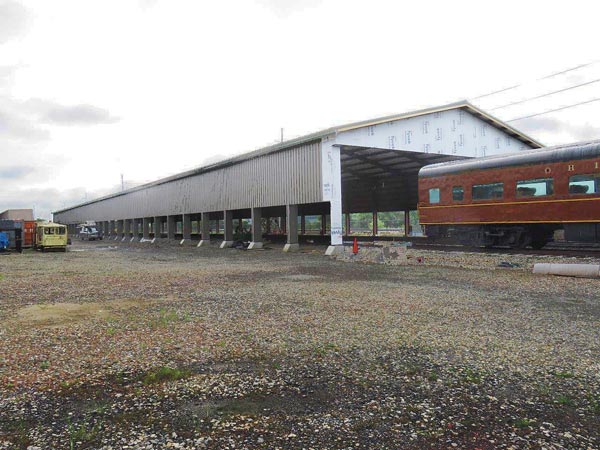
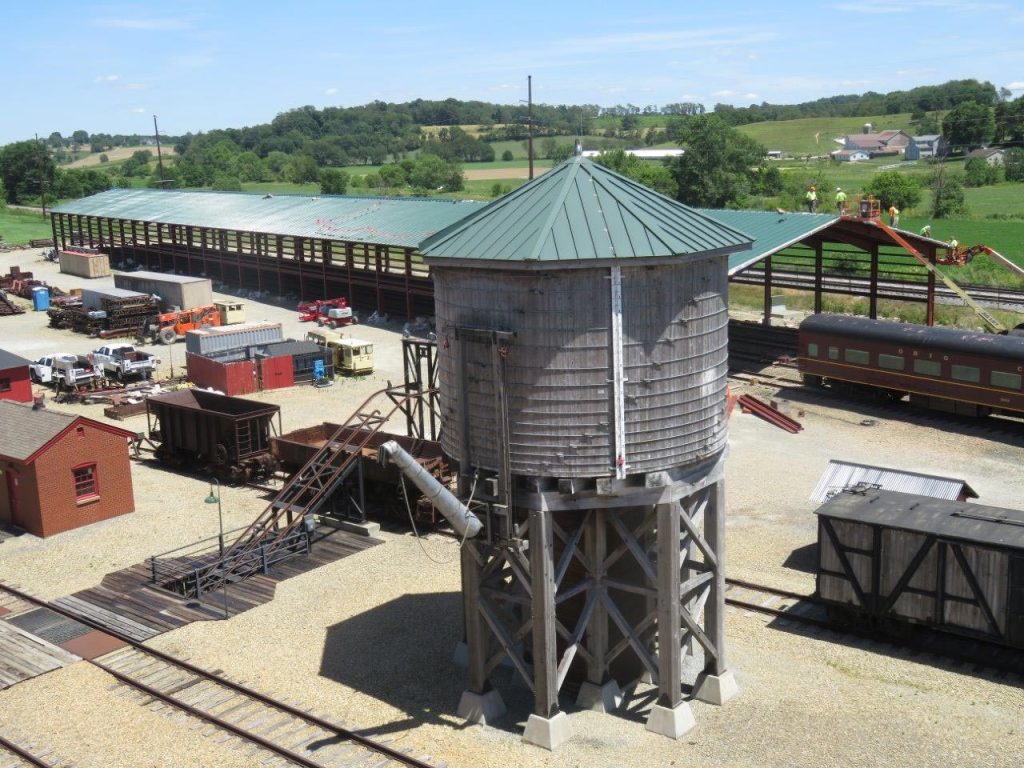
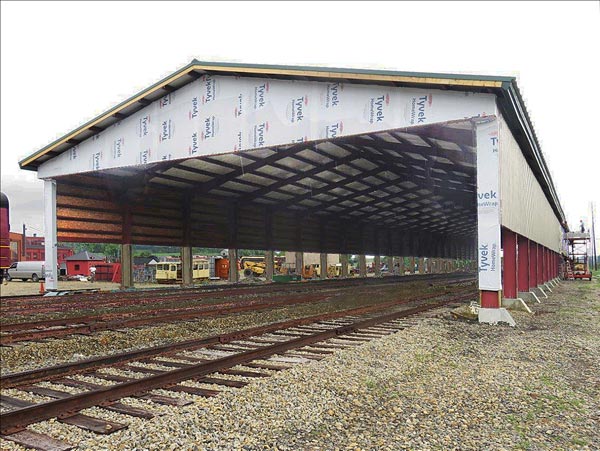
The largest project this year at the Age of Steam Roundhouse Museum has been construction of a 464’ x 65’ car shed that covers four existing storage tracks. This structure is being used to protect our growing collection of rail cars that have been restored or are awaiting restoration. The open-air storage shed will prevent rain and snow from causing rust and interior water leaks. The shed will also block direct sunlight from fading the cars’ exterior paint and degrading interior fabrics inside closed-up, stored passenger cars.

This 30,000-square foot structure has exterior lighting and a surveillance system, but will be used strictly for car storage, not repairs. As of this writing, finishing touches are being applied and most of the stored railcars have moved in. For safety reasons, the new car shed will not be open to the public at this time.

In recognition of a generous grant from the Timken Foundation of Canton, this impressive new addition will be called the Timken Foundation Car Shed.

Bessemer and Lake Erie Hopper Cars Acquired

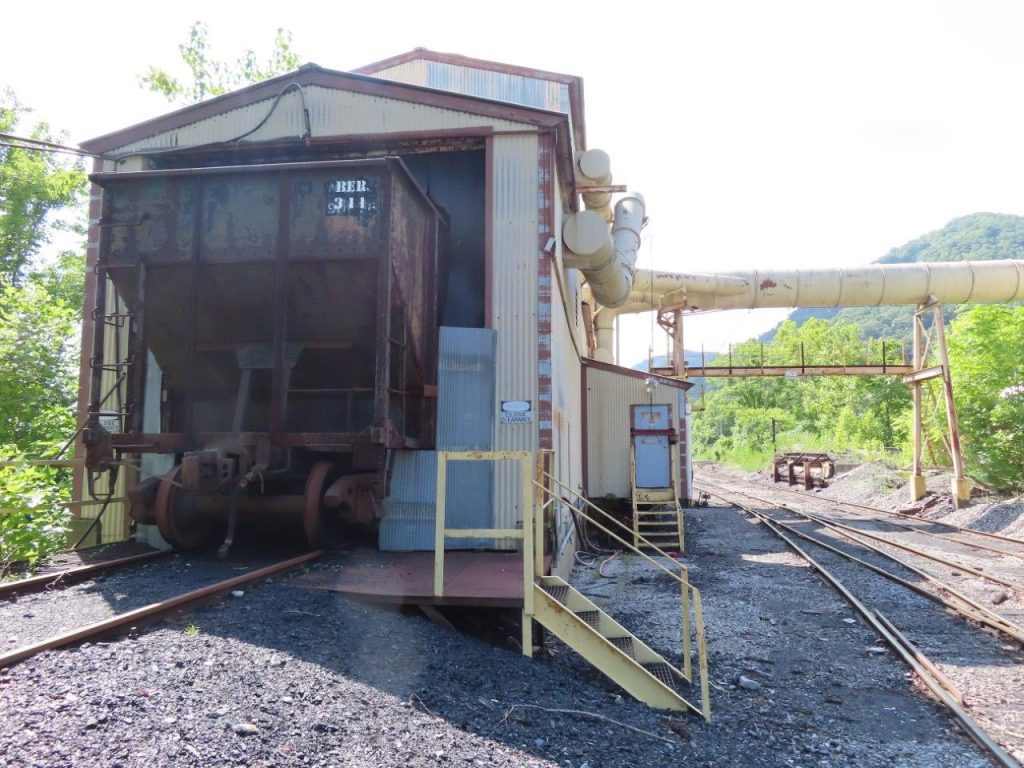
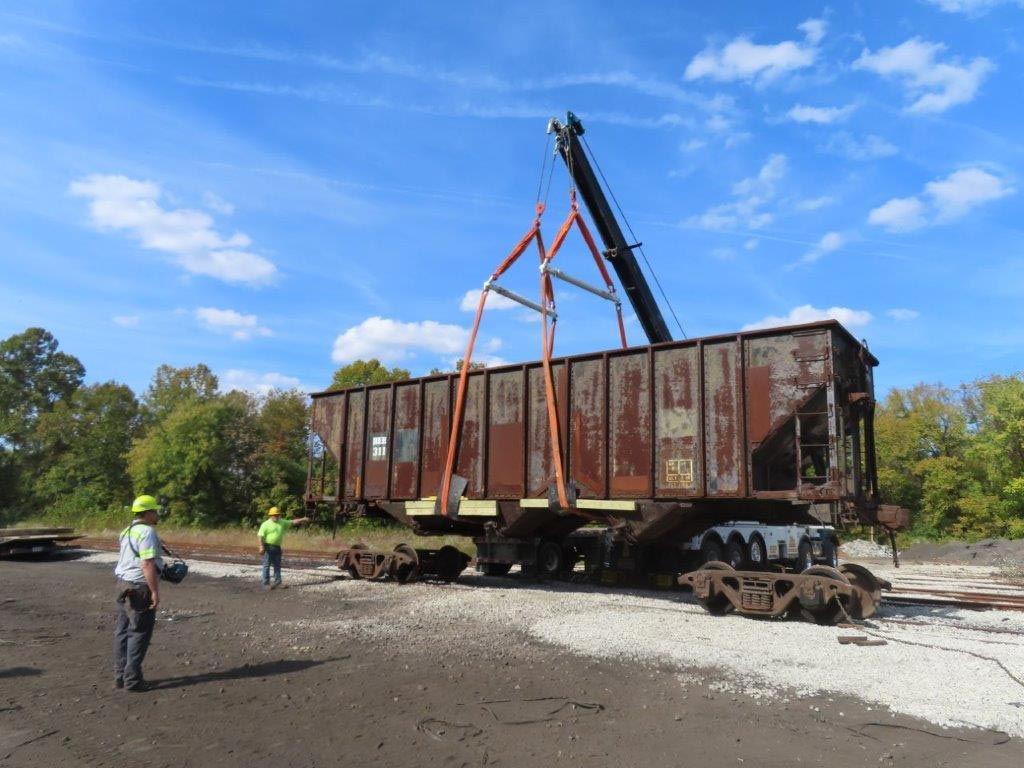
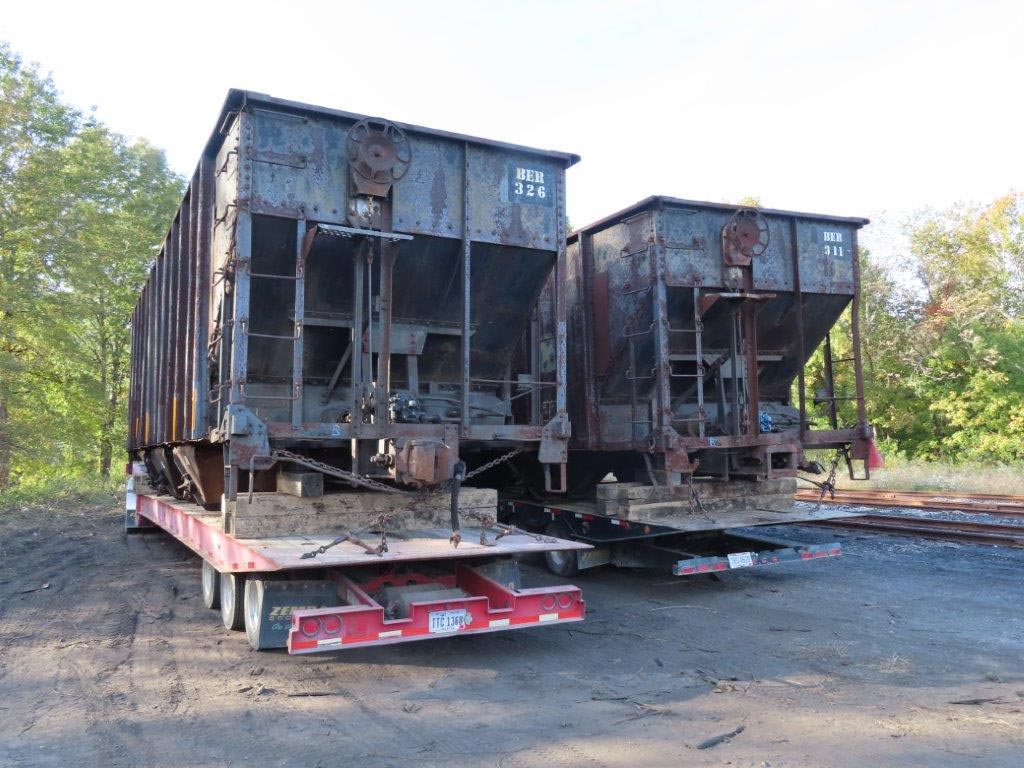
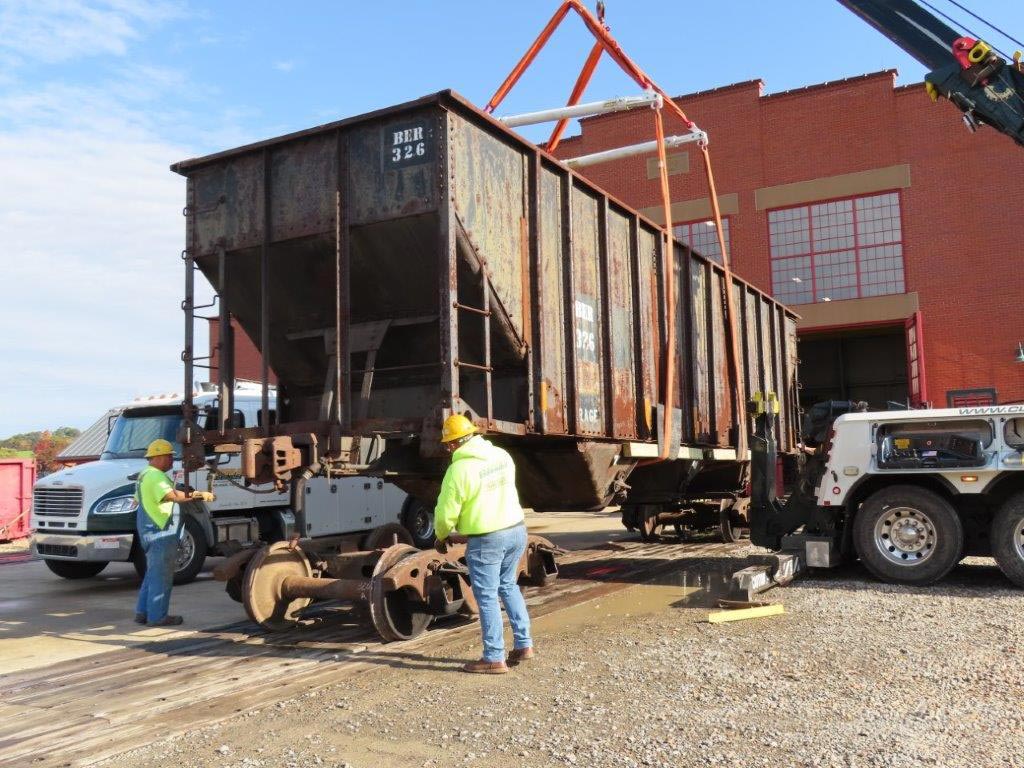
We were fortunate to find a pair of 88-year old, 3-pocket hopper cars hiding down in West Virginia. These former Bessemer & Lake Erie hopper cars were donated by the Kanawha Railroad, LLC (formerly Big Eagle Railroad) and are lettered BER #311 and BER #326. Fortunately, the pair also carries their original road numbers stenciled on their truck side frames, B&LE #90878 and B&LE #90366, respectively. These two venerable veterans endured a lifetime of hard service moving heavy loads of iron ore and coal, and were inadvertently “preserved” inside an unused hopper car coal dumper. AoSRM acquired ownership and transported them using highway trucks to Sugarcreek, arriving in October.

PRR Boxcar Restored to Original Appearance

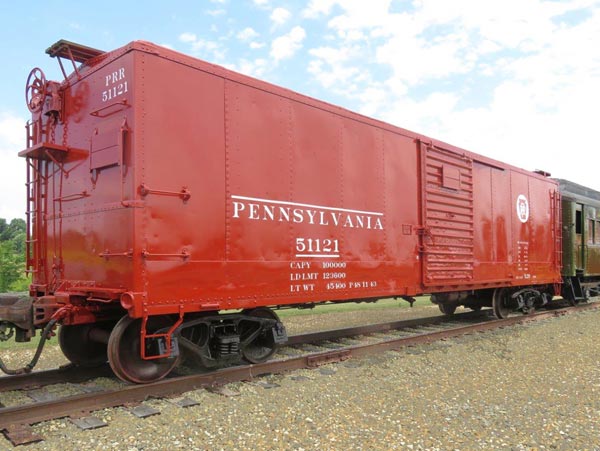
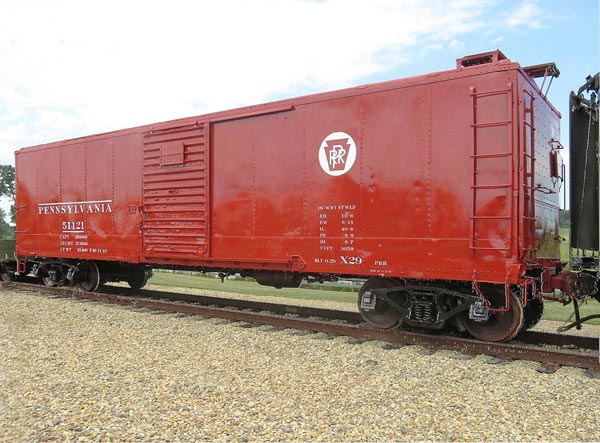
Pennsylvania Railroad Class X29 boxcar

This Pennsylvania Railroad Class X29 boxcar was beautifully restored in our shop by patching smaller rusted areas with Bondo body filler and welding-in new steel to replace larger, rusted-out side sheets. Our 93-year-old car was repainted into its original 1929 paint scheme with its original PRR road number, 51121. The paint color was carefully matched to a paint swatch loaned by the Pennsylvania Railroad Technical and Historical Society. Old PRR lettering diagrams were painstakingly followed to confirm that the car’s final lettering was spot-on. The beautifully refurbished Pennsy boxcar #51121 rolled out of AoSRM’s backshop in the summer of 2022 looking as good as new.

Our thanks go to Bruce Smith of the PRRTHS and John Frantz of Mt. Vernon Shops for their contributions of artwork, diagrams and paint swatches to ensure the accuracy of this project. More information on this boxcar is available here.

Lightweight Combine #9300 Repainted

Lightweight Combine #9300 being painted

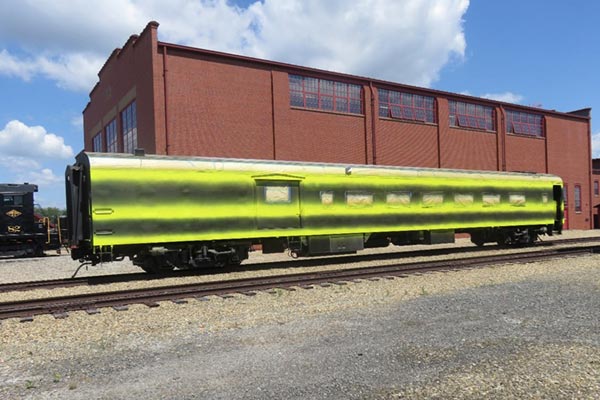
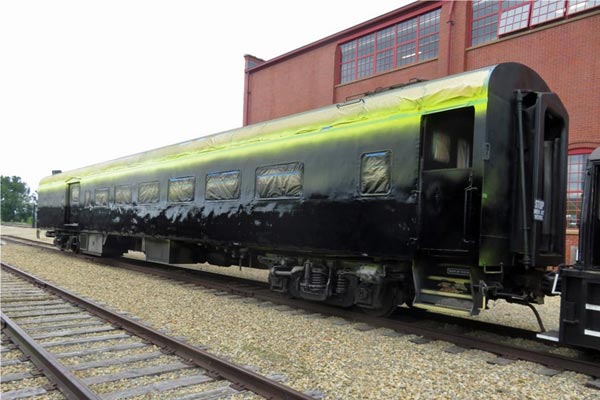
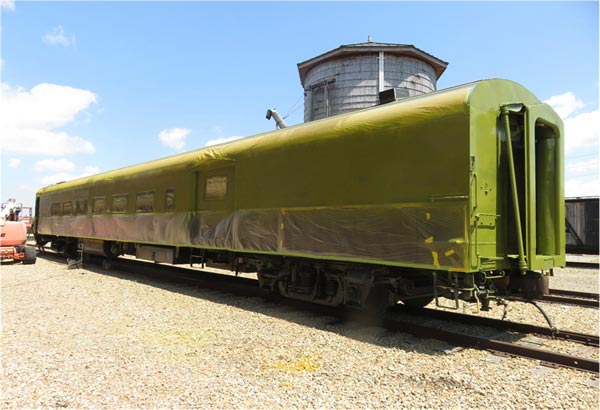
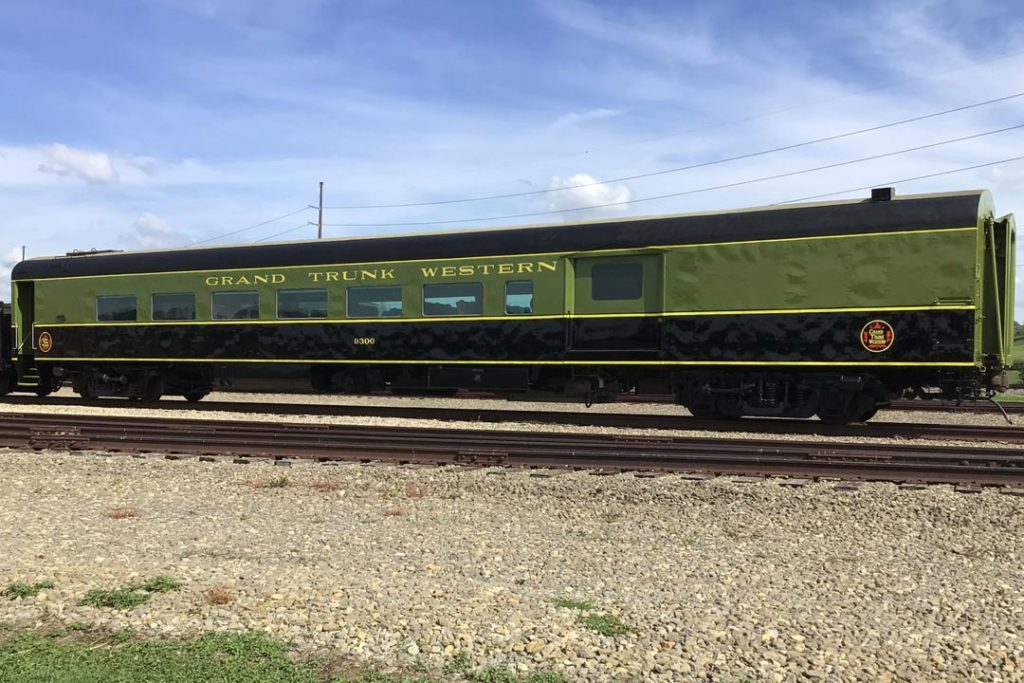
In 1954 a series of lightweight 76-seat air-conditioned coaches were constructed for the Canadian National Railway. These cars were used on most of CN’s passenger trains, including the renowned Super Continental. Most were sold to VIA Rail Canada in 1977 and a few years later some were rebuilt as 54-seat passenger-baggage combination cars (“combines”). Jerry Jacobson’s Ohio Central Railroad System bought one of them, #9300, for service on steam-powered passenger excursion trains. Recently, this combine was given an exterior restoration back to its original 1954 paint scheme of black and olive green with yellow striping.

These photos show the progression of the painting and masking process after body work was finished, starting with yellow paint for the stripes. Next came black paint, then green. Finally lettering and logos were applied for CN’s American subsidiary, the Grand Trunk Western. More details on our entire CNR coach set are available here.

PRR Fire Hose Storage Shed & Cart

Fire Hose Storage Shed
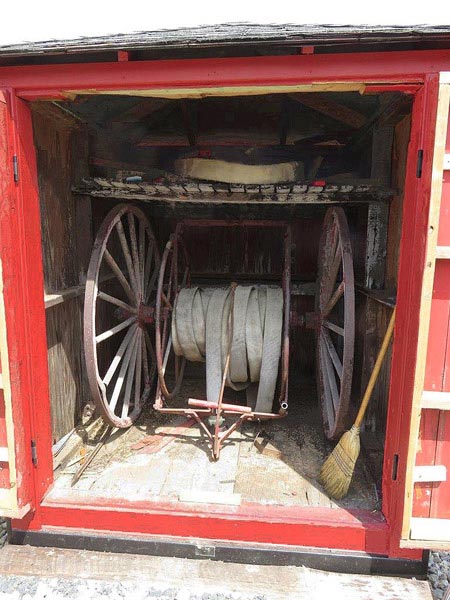
Fire Hose Cart inside the Storage Shed

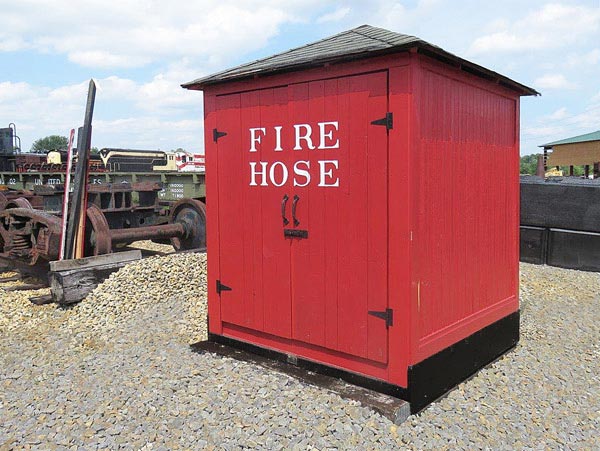
Recently acquired for our collection is this fire hose storage shed and its two-wheeled hose cart that were once owned by the Pennsylvania Railroad. It is unknown at which yard or locomotive facility where this piece of fire-fighting equipment was used, but the shed is representative of such “hose houses” found all across the Pennsy and many other railroads.

During restoration, the hose house received some new replacement wood, but care was taken to keep this structure as original as possible while still restoring it to an operational state. A fresh coat of red paint and neat white lettering have been applied to the exterior, but its interior and hose cart have yet to be refurbished. Not many of these once-ubiquitous buildings have survived, so we were happy to have an opportunity to save, restore and exhibit this one for everyone to enjoy.

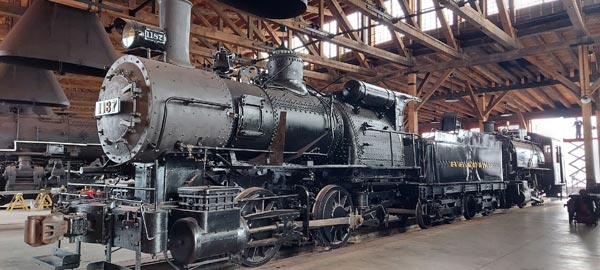
Reading 0-4-0 Camelback #1187 Receives Cosmetic Restoration

Age of Steam workers have scraped off layers of accumulated paint, rust, scale, and grease from deteriorated 0-4-0 Camelback #1187. The engine and tender were thoroughly cleaned, and several stored appliances and associated piping have been re-hung in their proper positions on the boiler. The smaller, open-air rear cab for the fireman was repaired and re-applied. The badly rusted engineer’s cab that sits atop the boiler is being rebuilt. Protective paint was applied, and the tender was once again lettered for the Reading Railroad. Additional work will be accomplished during the winter so that Age of Steam Roundhouse Museum visitors may enjoy seeing this rare and beautiful Camelback in all its glory when our next tour season begins on April 1, 2023.

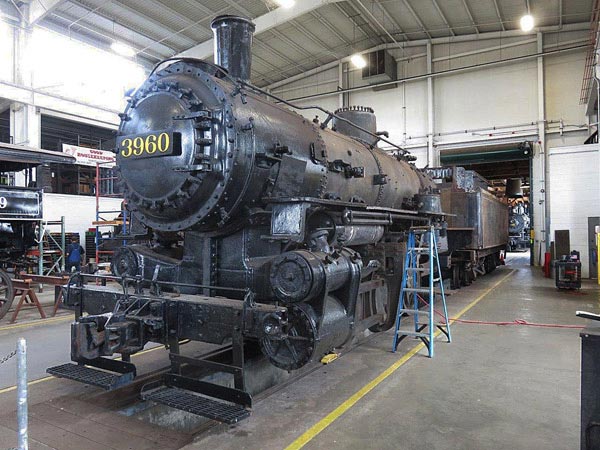
W&LE 0-6-0 #3960 Receives Cosmetic Work, UT Grid

W&LE 0-6-0 #3960

Previous visitors taking Roundhouse tours saw a “checkerboard” grid pattern that had been painted onto the bare boiler of one of our locomotives during a boiler survey. This led to questions and answers about how boilers work, safe locomotive operations, and the incredible power of steam. This topic fascinated our tour-takers, so a new subject was added into subsequent Roundhouse tours. When that locomotive received a full cosmetic restoration, the grids were painted over and this conversation piece was no longer a part of our tour.

Wheeling & Lake Erie 0-6-0 #3960 was already in the backshop receiving a general cleanup and some fresh paint, so it was selected to receive the same checkerboard grid pattern. When a locomotive is to undergo a Federal Railroad Administration-mandated, 15-year/1,472-day inspection, hundreds of these 12” x 12” squares are onto the outside (and inside!) of the boiler. Each square is numbered to allow easy identification during non-destructive testing. By using an ultrasound testing (UT) device similar to those used by doctors on mothers-to-be, a measurement of the thickness of the remaining boiler steel can be taken and cataloged. These measurements are then used to calculate the safe operating steam pressure that can be used in the boiler of that particular loco. The stripped-down #3960 was the perfect locomotive to receive that UT checkerboard grid and will add a little-known story back into our Roundhouse tours. Currently there are no plans to restore #3960 to operational status.

B&LE 2-10-4 #643 Update

We frequently receive questions about the status of moving former Bessemer and Lake Erie 2-10-4 #643 to the Roundhouse from its longtime storage location in Pittsburgh. The locomotive’s tender and many other major components were safely moved to Sugarcreek just before the COVID-19 pandemic struck. Extracting the massive engine itself is a complicated endeavor due to the surrounding tight city streets, active rail lines, and other nearby public and privately-owned infrastructure. AoSRM continues to work diligently with the appropriate parties to finalize the plan for moving the engine to Sugarcreek. As soon as all of the details are in place, we will relocate the locomotive and wrap up this long-term project. Updates will be shared as they become available. We look forward to displaying #643 at Age of Steam, this engine’s first time on public display in decades.

McCloud River RR 2-8-2 #19 Restoration Continues

McCloud River RR 2-8-2 #19 in the shop
McCloud River RR 2-8-2 #19 new parts fabricated

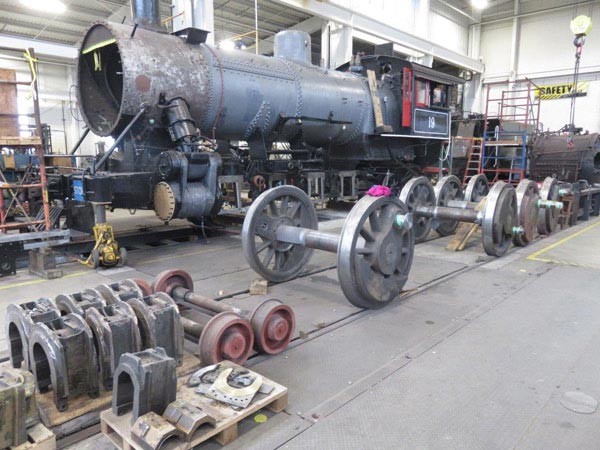
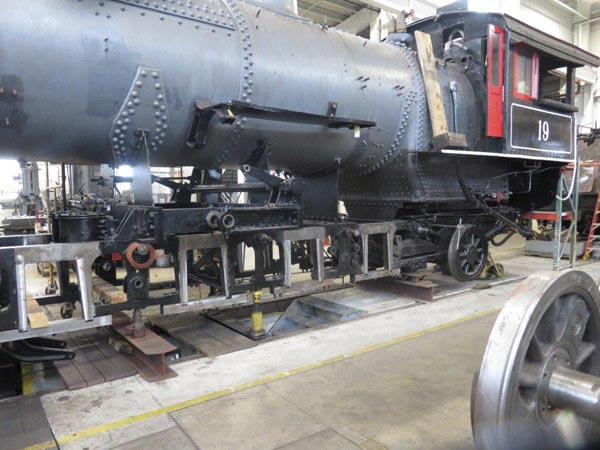
1915-built McCloud River Railroad 2-8-2 #19 has been in the backshop for quite some time now, with nearly every component having been removed, inspected, and repaired as needed. As work progressed many more necessary repairs were uncovered, including old repairs that had been made on top of even older repairs. In such situations, completely new parts were cast at the local steel foundry or machined in our shop.

#19’s boiler has been fully inspected and necessary repairs – including a new firebox door sheet and a patch on the front tube sheet – have been completed. Newly built superheater units, tubes and flues have arrived and are ready for installation. Receipt of many restoration materials has been delayed by COVID-caused unemployment and supply-chain challenges.

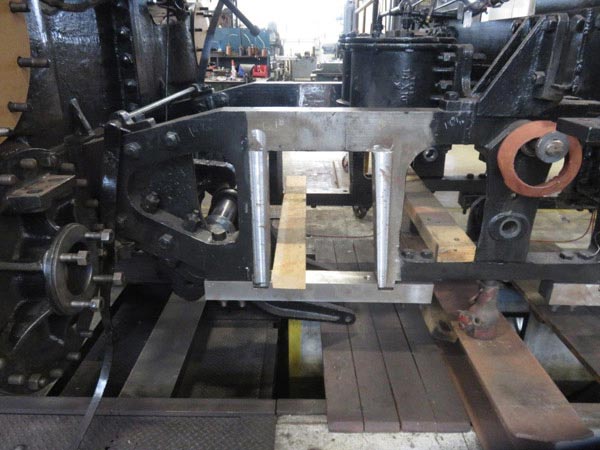
Recent work on #19 includes a thorough inspection of all brake rigging. During inspection large amounts of wear were found on some supporting components. These were welded-up and re-machined as good as new, and all-new pins and bushings were machined in the shop and installed. All of the locomotive’s frame pedestal surfaces – which guide the driving box shoes and wedges up and down – needed welding to build up missing steel. These surfaces were then re-machined to provide smooth, flat contact planes. Since you can’t simply set up a locomotive frame in the nearest milling machine, the machine shop crew designed and built an innovative portable milling machine that was bolted to #19’s frame and that allowed precision resurfacing of all of these built-up welds. (Great job, guys!)

The laying-out of #19’s cylinder centerlines was undertaken so that the cylinder bores are exactly parallel to the locomotive’s frame. This is important because #19’s pairs of pistons, piston rods, driving rods, and valve gear are connected together, so all of these parts must operate in a unified manner for the smoothest operation. Two other recently completed projects were the machining of the steam dome seat where the soft copper “round-ring” will sit and be squeezed to ensure a steam-tight fit between #19’s steam dome and its newly fabricated steel dome lid. This lid and its round-ring seal must contain the 185 pounds of steam boiler pressure constantly being pushed against them. Support springs and hangers for #19’s main driving axle have come to the workbench as the next project.

The Age of Steam Roundhouse Museum will continue its complete and safe restoration of #19 until it is ready to operate once again. We will periodically update you as to this loco’s progress and look forward to returning this famous engine to service soon.

Season's Greetings

Thank you for your continued support of the Age of Steam Roundhouse Museum. We wish you and yours a very Merry Christmas and a Happy New Year. More tours, events and exciting updates are coming in 2023. We look forward to your next visit to the Roundhouse!

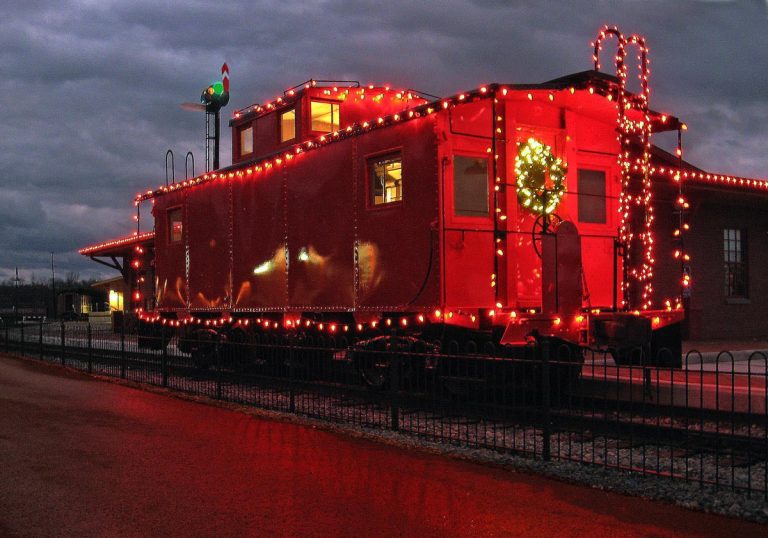
red caboose decorated with christmas lights

Jerry Jacobson and the Veteran's Air Lift Command
By Rich Melvin

Rich, Nick Vogt, and Lauren Honeycutt are in Mansfield, Ohio, about to board Jerry's aircraft for their flight to Gaithersburg. You can see the engagement ring on Lauren's left hand.

I had the honor to serve as the Ohio Central Railroad’s corporate pilot from January 2007 through December 2015. The railroad purchased a 1990 King Air C90A, a 6-passenger, 320-mph turbo-prop aircraft. I flew a total of 805 flights in this aircraft, most of which were for Ohio Central business. However, a few of those flights were truly special. More about that later.

Jerry often used his aircraft to travel around the country to inspect locomotives for sale that he wanted to purchase, and then “flip” them for resale to earn a profit. He would travel back and forth from his home in Ohio to Charlottesville, Virginia, to visit his two sons who attended Fork Union Military Academy in the town of Fork Union. When Jerry sold his railroad to Genesee & Wyoming in 2008, his use of the aircraft dropped a little. And when his two boys graduated from the academy, his use of the plane dropped dramatically. The aircraft sat idle for weeks at a time.

The worst thing one can do to a turbo-prop plane is to allow it to sit unused. I became concerned that maintenance costs would increase and flight dispatch reliability would decrease. I began a search for some kind of use for the aircraft that Jerry would approve. We tried doing some charter flights with the aircraft, but more paperwork, higher insurance premiums and increased maintenance costs quickly showed that part-time charter was not a profitable venture. After about a dozen trips, Jerry told me to terminate the charter operations.

I was browsing the internet looking for possible flight opportunities for us when I ran across a very interesting web site. It was the Veterans Airlift Command (VAC), located on the web at veteransairlift.org. Through a national network of volunteer aircraft owners and pilots, the VAC provides free private air transportation to post-9/11 combat wounded and their families for medical and other compassionate purposes. The VAC relies on pilots to donate their time and for aircraft owners to donate their aircraft to fly the various missions. As I learned more about the VAC, I realized that this was something that Jerry just might find interesting. Jerry was extremely proud of his military service for the United States Army as a paratrooper in the 82nd Airborne Division. In fact, we even displayed the 82nd’s logo on the fuselage of Jerry’s aircraft!

Soon after learning about VAC, I called Jerry at home to tell him about this unique organization. I spent several minutes briefing him about the VAC, what they did, who they did it for, and how they did it. I wasn’t sure if Jerry would approve of this because there was no financial upside to it. Jerry was a savvy businessman, and I wasn’t sure if my “sales pitch” about the VAC was going to work. However, I quickly learned that Jerry’s unflagging patriotism and love of our military veterans far outweighed any financial concerns he might have had.

When I finished my sales pitch, Jerry immediately said, “Richard…” (he always called me “Richard”, never just “Rich”) “…you get set up with those guys and start flying missions for them! I don’t care about the cost, just get us on their list and fly for them as often as you can!”

Right there, in two short sentences, I learned all that I needed to know about Jerry’s love for our military veterans. They were at the top of his list and their welfare far outweighed everything else.

I completed the application and certification procedure to get Jerry’s plane on the list of qualified and available VAC aircraft. Flights were assigned on a volunteer, mark-up basis. VAC published a list of needed flights on their web site. Pilots could go to the list, scan it for flights suitable to their aircraft and geographic location, and “mark up” for a flight. For my first VAC flight I chose a mission out of Gaithersburg, Maryland, going to Pittsburgh, Pennsylvania. There would be only two passengers and the flight was fairly close to home, making it very suitable for the King Air.

At the appointed time I landed at Gaithersburg. There, I met a unique Army veteran, Nick Vogt. An aspiring Army trauma surgeon, Vogt graduated from West Point in 2010. A year later he was serving in Afghanistan with the 1st Stryker Brigade, 25th Infantry Division. But his service on the battlefield was short-lived. Just two months into his service in Kandahar Province, Nick stepped on an improvised explosive device (IED) that was buried in the soil beneath his feet. The bomb exploded, taking off his left leg and mutilating the right. Nick was considered “clinically dead.”  He was bleeding profusely, but his fellow soldiers rallied the troops at their Kandahar post and quickly donated 300 pints of blood for Nick. Much more would be needed, as Nick faced many traumatic surgeries. He holds the military record for the number of pints of blood used to save his life – over 400 pints! Unfortunately, Nick lost both of his legs in this horribly traumatic event.

On these flights Nick was always accompanied by his nurse, Lauren Honeycutt. She tended to his medical needs during the trips and helped him get into and out of his wheelchair. Lauren was a cheerful young woman, always very kind and attentive to Nick’s numerous needs.

I flew Nick and Lauren to Mansfield, Ohio, a few times. Nick’s family lives near Crestline, which is a city familiar to any railroad fan. The airport at Mansfield was the closest for these visits with family, and in April 2014 I flew Nick and Lauren there for the Easter holiday. A few days later when I went back to the airport for the return flight back to Gaithersburg, something very special happened. Their car pulled up and Lauren got out. She usually went to the back of the car to get Nick’s wheelchair, but on this day she got out and started running…toward me! Lauren was shouting, “Rich! Rich! Look!” as she held out her left hand. When she got closer I saw an engagement ring on her finger! Nick had proposed to Lauren on this visit and she said, “Yes!“

I concluded by flying only ten missions for the Veterans Airlift Commnd before Jerry decided that it was time to sell his aircraft. I really enjoyed those flights! They were always very special flights for me, because I was given the opportunity to serve some very special people.

I flew Nick and Lauren on several more flights, but none was as special as the Easter holiday flight in April 2014.

Refund Policy

Tickets may be refunded for cancellations up to 24 hours before a scheduled tour or event begins.  The processing fee, or any other incurred charges, will not be refunded.  No refunds will be given within 24 hours of, or after, the ticketed tour or event start time.